 Korouoma Canyon
What to Wear at Korouoma Canyon in Winter
Last reviewed September 2026
What to wear at Korouoma comes down to three decisions: what goes on your feet, what stops the wind, and what you can take off when the descent makes you sweat. The reserve settles the first one, because the trail gets no winter maintenance and Metsahallitus states outright that ice grippers are needed. The rest is ordinary Arctic layering, and about half the tours on this site hand you the outer shell of it at the door. Here is the list, what each tour supplies, and what is worth renting rather than buying.
Quick answer The one item the reserve insists on, and who hands you the rest
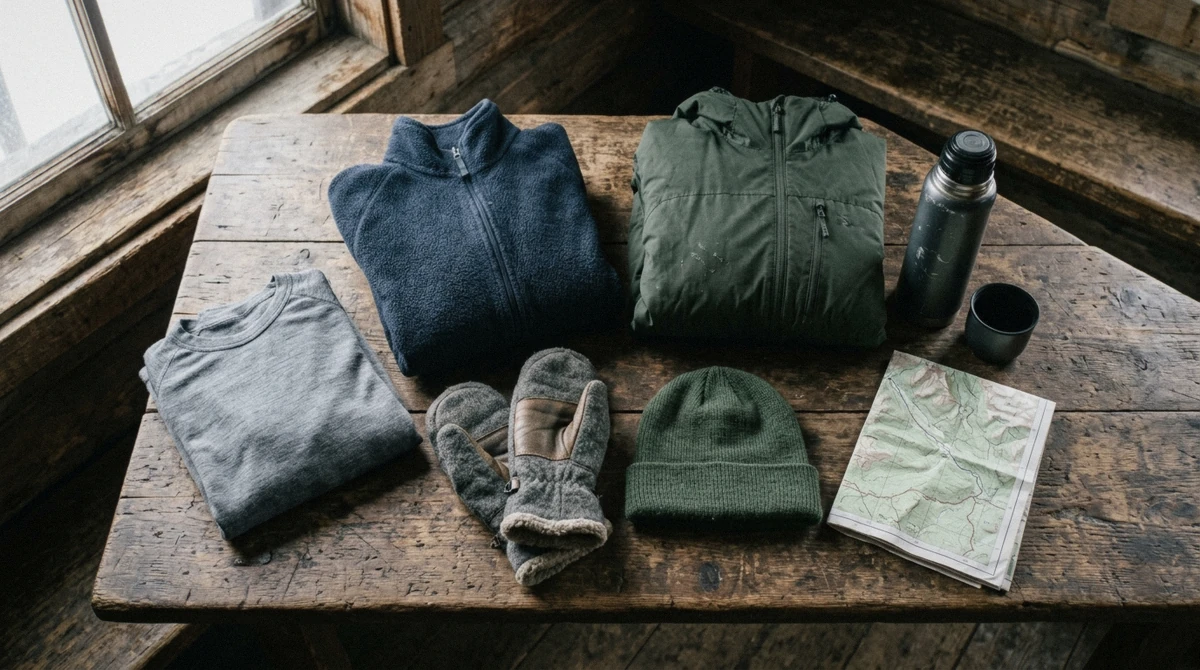
Ice grips are the non-negotiable item at Korouoma: the Koronjaa loop has no winter maintenance and Metsahallitus says plainly that it is dangerously slippery in winter and grippers are needed. Over that, wear a merino or synthetic base layer, a fleece, and a windproof insulated shell, with mittens rather than gloves and a hat that covers the ears. Four of the tours here supply overalls and boots; two supply grips; two supply nothing at all.
Key takeaways
- Ice grips first, everything else second. Which Korouoma tours supply them
- Never cotton against the skin: you sweat on the descent and stand still at the fire
- Mittens beat gloves, and a spare pair lives in the pack
- Four listings hand you overalls and boots at the door
- Water, rubbish bag and toilet paper, because the trail has none of the three
Feet First
Grips, and which kind
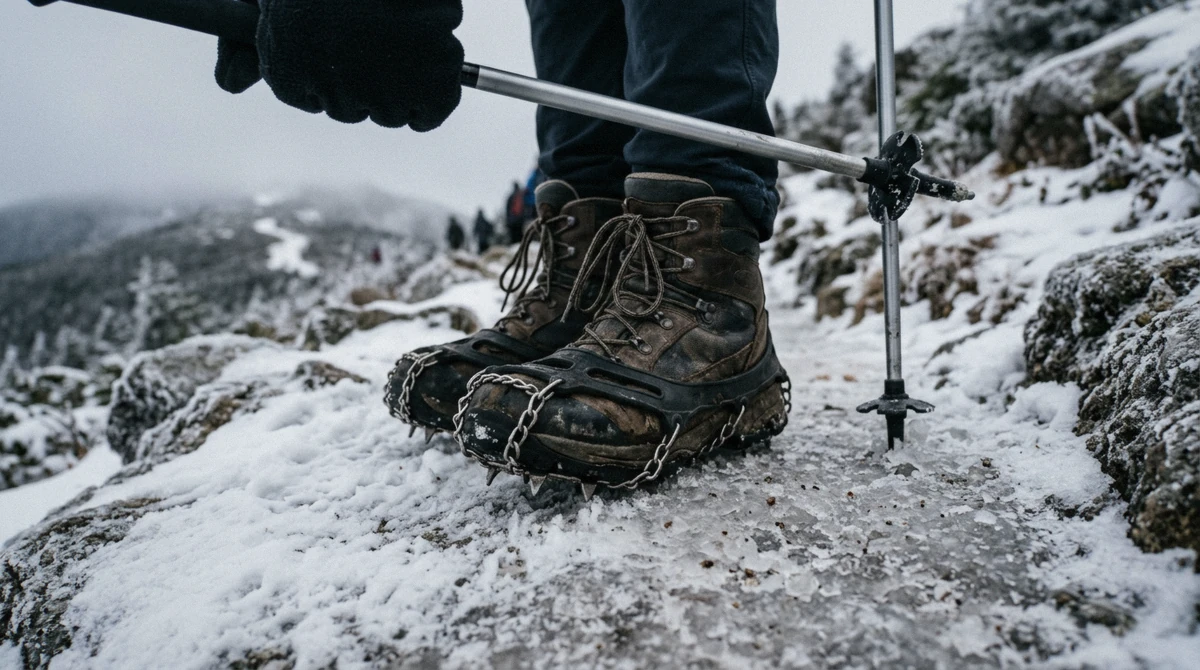
Metsahallitus publishes the Koronjaa Trail as graded Hard with no winter maintenance, and adds that in winter it is dangerously slippery and ice grippers are needed. That is the whole argument. Every serious complaint you will read about this hike comes from someone who walked it without them.
What you need is simple strap-on cleats: a rubber harness with chains or spikes that stretches over an ordinary winter boot. Not mountaineering crampons, which need a rigid sole and are for the ice climbers, and not the four-stud rubber pads sold for icy pavements, which slide on a snow slope. If a tour supplies grips or spikes, that is what it means.
Boots
An insulated boot above the ankle, with a lugged sole and room for a thick sock without crushing it. Circulation is what keeps a foot warm, so a boot that fits tightly with a heavy sock is worse than a looser one with a thinner sock.
Four listings supply winter boots: Wild about Lapland on both of its days, Beyond Arctic and BookLapland, whose kit is rated to about minus forty. If you are on one of those, the boots you fly in with only need to get you to the office.
The Layers, in Order
Three that work, one that does not
Base layer: merino wool or a synthetic, next to the skin, full length. Mid layer: fleece or a light down sweater. Outer: a windproof and preferably waterproof shell, or the thermal overall the tour hands you. Cotton anywhere in that stack, including a cotton t-shirt under a fleece, is what turns the fire stop into a miserable half hour, because it holds the sweat from the climb and gives it back to you when you stop moving.
The walk itself is warm work. The descent, the flat section and the ascent all generate heat; the viewpoints and the fire do not. Anything you cannot open or remove without stopping is the wrong garment.
Hands, head and face
Mittens over gloves, because fingers warm each other. Take a spare pair: a wet mitten at minus twenty is a serious item, and dropping one in the snow at a viewpoint is common. A wool hat that covers the ears, and in February a buff or face covering for the rim, where the wind is.
Sunglasses matter more than people expect from March onwards, when Posio gets 11 to 14 hours of daylight and the sun sits low all of them. Snow at this latitude with a low sun in your eyes for hours is genuinely tiring, and there is no shade on the rim.
What each tour hands you
Roughly half the field dresses you and half assumes you dressed yourself. This is the single biggest hidden difference between two listings at the same price.
| Tour | Overalls and boots | Ice grips | What you still need |
|---|---|---|---|
| Arctic GM | Thermal overalls | On request | Base layers, mittens, hat |
| Wild about Lapland | Overalls and boots | Not listed | Base layers, mittens, hat, grips |
| ToTheNorth | Not listed | Snow grips included | Full winter kit |
| Beyond Arctic | Clothing and boots | Not listed | Base layers, mittens, hat, grips |
| BookLapland | Rated to about -40C | Not listed | Base layers, mittens, hat, grips |
| Arctic Aurora | Not listed | Spikes included | Full winter kit |
What Goes in the Pack
The five things the trail does not provide
Metsahallitus lists what is not at Korouoma: no water point, no waste bins, and a dry toilet that asks you to bring your own paper. Since 1 June 2025 there is also no firewood at the lean-tos on the long trail. And there is patchy mobile coverage in the canyon, which the reserve answers with a recommendation to carry a paper map and compass.
So: water, a rubbish bag, toilet paper, wood if you plan a fire, and a way to navigate that does not depend on a signal. On a guided day the wood and the navigation are handled; the other three are still yours.
The small things that matter more than they should
A head torch between November and February, because the light goes early and the climb out can be in the dark. A spare battery or an inside pocket for your phone, because cold flattens a full charge in under an hour and a dead phone is a dead camera. A thermos, if your tour does not carry one. Snacks, particularly on the listings that serve a campfire snack rather than a meal.
And sunglasses from March. That is the list; everything else is optional.
Cameras in the cold
Batteries are the whole story. A lithium cell at minus twenty holds a fraction of its rated charge, recovers most of it when warmed, and gives no warning before it drops out. Carry spares against your body and swap rather than nurse. Condensation is the second problem: a cold camera brought straight into a warm van fogs inside as well as out, so put it in a bag before you get in and let it warm slowly.
Beyond that the canyon is forgiving. The light is soft, the subject does not move, and a phone will produce something decent from a viewpoint. What a phone will not do is convey the height of a fifty-metre wall, which needs a person in the frame and a step further back than instinct suggests.
The Korouoma Packing Checklist
On your body
Assembled from the reserve's own requirements and what the guided listings hand out, this is the working list for a winter day in the canyon. Tick the supplied items off against your booking rather than packing twice.
- Merino or synthetic base layer, top and bottom, never cotton
- Fleece or light down mid layer
- Windproof insulated shell, or the thermal overall your tour supplies
- Insulated boots above the ankle, roomy enough for a thick sock
- Ice grips or cleats that fit those boots
- Mittens, plus a spare pair in the pack
- Wool hat covering the ears, and a buff for the rim wind
- Sunglasses from March onwards
In the pack
Short, and every item earns its place because the trail supplies none of them.
- Water: there is no water point on the loop
- A bag for your rubbish: there are no bins
- Toilet paper: the dry toilet is no longer maintained
- Head torch between November and February
- Spare phone battery, or an inside pocket to keep the phone warm
- Snacks, particularly on the listings that serve a campfire snack rather than a meal
- Wood for the fire, unless the woodshed at the lean-tos has been filled
- A paper map, which the reserve recommends for patchy coverage
What to leave behind
Jeans, which freeze wet and stay wet. A hip flask, because alcohol in the cold is a poor idea and several operators ban it outright. A drone: this is a protected nature reserve and other people came for the silence. And anything you would be upset to drop into deep snow at a viewpoint, because that is where things get dropped.
A tripod is a judgement call. In midwinter twilight it is genuinely useful and it is also one more thing to carry on a roped descent, which is part of why the photographer-guided day exists.
Renting in Rovaniemi Instead of Packing It
What is worth renting
Nobody should buy an Arctic overall for one week. Rovaniemi has a well-developed rental market in winter kit, and several outdoor operators rent cleats, overalls, boots and snowshoes by the day. The trailhead cafe at Korouoma also rents ice cleats for a small fee, when it is open, which on a January morning it may not be.
The decision comes down to what your tour already includes.
| Item | Buy | Rent | Or pick a tour that includes it |
|---|---|---|---|
| Ice cleats | Cheap and packable, worth owning | Available in Rovaniemi and at the trailhead cafe | ToTheNorth, Arctic Aurora |
| Thermal overall | Only if you live somewhere cold | Widely rented in Rovaniemi | Four listings supply one |
| Winter boots | If you will use them again | Rented with the overall | Wild about Lapland, Beyond Arctic |
| Base layers and mittens | Always yours | Not rented | Nobody supplies these |
The one thing not to leave to the day
Booking a tour that does not supply grips and planning to rent them at the trailhead is the plan that fails. The cafe is a small seasonal business and its hours do not match an early winter departure.
Rent in Rovaniemi the afternoon before, or book one of the listings that puts them in the price. Compare what each departure includes before you decide which problem you are solving.
Clothing and Kit: Common Questions
Do I really need ice grips at Korouoma?
In winter, yes. The reserve does not maintain the trail for winter use and states directly that it is dangerously slippery and that ice grippers are needed. The descent into the canyon is the section where it matters, and it is the section everyone has to do.
Are microspikes and crampons the same thing?
No. Microspikes or cleats are rubber harnesses with chains or short spikes that stretch over a normal boot, which is what you want here. Crampons are rigid steel frames for climbing ice, which is what the ice climbers on Mammutti are wearing.
What if my tour supplies overalls, do I still need a coat?
No, and wearing one under the overall usually makes it worse. Arrive in base layers and a fleece; the overall is the outer shell. Bring your coat on the van if you like, but the point of the supplied kit is that it replaces what you own.
How cold does it feel while standing at the fire?
Colder than the walking. Averages at Posio sit around minus eleven in midwinter with individual days much lower, and the fire stop is half an hour of standing still. This is why the spare mittens and the hat matter more than another jacket.
Can I wear snow boots I bought for a city trip?
If they are insulated and come above the ankle, with grips over them, usually yes. Fashion snow boots with smooth soles and low ankles will let snow in on the descent and give you nothing to attach cleats to.
Is anything provided at the trailhead?
A dry toilet that is no longer maintained, a car park, fire pits, and the Korouoman Erakahvila cafe, which sells hot drinks and rents cleats when it is open. There is no water point and there are no bins.